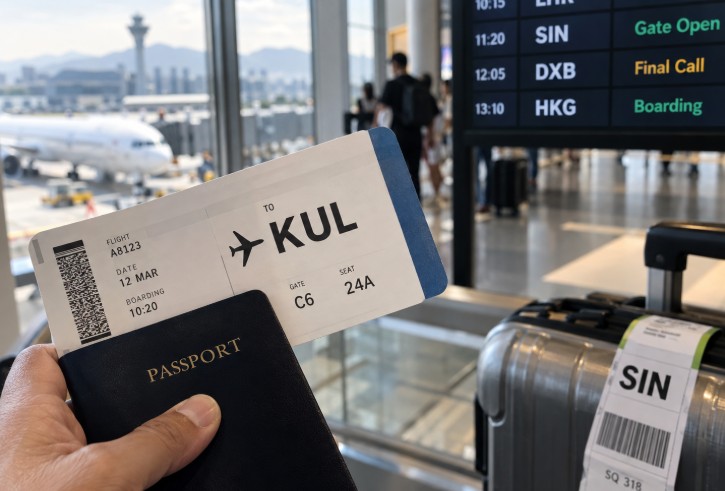
Every traveller has seen them. KUL. LHR. JFK. DXB. SIN. CDG. They sit quietly on boarding passes, baggage tags, airport screens and travel apps. Most of us glance at them, recognise where we are going, and move on. But those three letters are doing more than saving space. They are part of the hidden language of travel.
Airport codes feel so normal now that most travellers barely question them. Some are easy to guess. KUL means Kuala Lumpur. SIN means Singapore. DXB means Dubai. Simple. Then others start acting mysterious. Why is London Heathrow LHR? Why is Paris Charles de Gaulle CDG? Why is Chicago O’Hare ORD? These codes are not random decoration. They help airlines, airports, booking systems, and travellers identify places quickly and clearly. Imagine rushing through an airport and having to read long airport names on every screen, every luggage tag and every ticket. Suddenly, three letters feel very useful.
Some Make Sense. Others Have History.

The easiest airport codes usually come from the city or airport name. But not every code follows the name travellers use today. Some codes come from older airport names. Some are linked to nearby cities. Some were chosen because another airport already had the obvious letters. That is why airport codes can feel like tiny travel fossils. Take Chicago O’Hare, for example. Its code is ORD because the airport was once connected to Orchard Field. So while travellers know it as O’Hare, the code still carries a piece of its older identity.
They Can Change the Whole Arrival Experience

These codes also help a lot when a city has several airports. London is a perfect example. You may think you’re simply flying to London, but LHR, LGW, STN, LTN and LCY all mean different arrival points. That tiny code can affect how far you land from the city, how much transport costs, and how smooth the first day feels.
Your Bag Depends on Them Too
Interestingly, they also help luggage know where to go. The code printed on a baggage tag helps airport systems send bags to the right destination. Most travellers only think about this when something goes wrong. But every time a suitcase appears on the correct belt after a connecting flight, those three letters have done their job. Not glamorous. Very important.
Look Twice Next Time

Airport codes are hiding in plain sight. You’ve probably seen them on almost every trip, but rarely stop to think about where they came from or why some look so strange. Some are obvious. Some are confusing. Some carry old names. Some help travellers avoid landing much farther away than expected. And all of them help turn a complicated global travel system into something we can understand at a glance. So the next time your boarding pass shows three bold letters, look at them properly. They are not just an abbreviation. They might be the smallest travel story printed on your ticket yet.
Use QVI Vacay for your next trip to enjoy exclusive travel deals. Send a sign-up request to help@myqvi.com or call +60386053383 to get started.